Continuing Education and Community: WAPI’s 2025 Training Day
Investigators don’t operate in a vacuum. To keep pace with evolving technology, law, and professional standards, we need places to learn and share. On Saturday 15 November 2025, the World Association of Professional Investigators (WAPI) provided just such a forum at the Union Jack Club in London. Their Continuing Education Workshop – Training Day brought together private investigators, compliance professionals and business leaders to explore how technology, best‑practice tracing techniques and regulatory frameworks are reshaping our work.
About WAPI
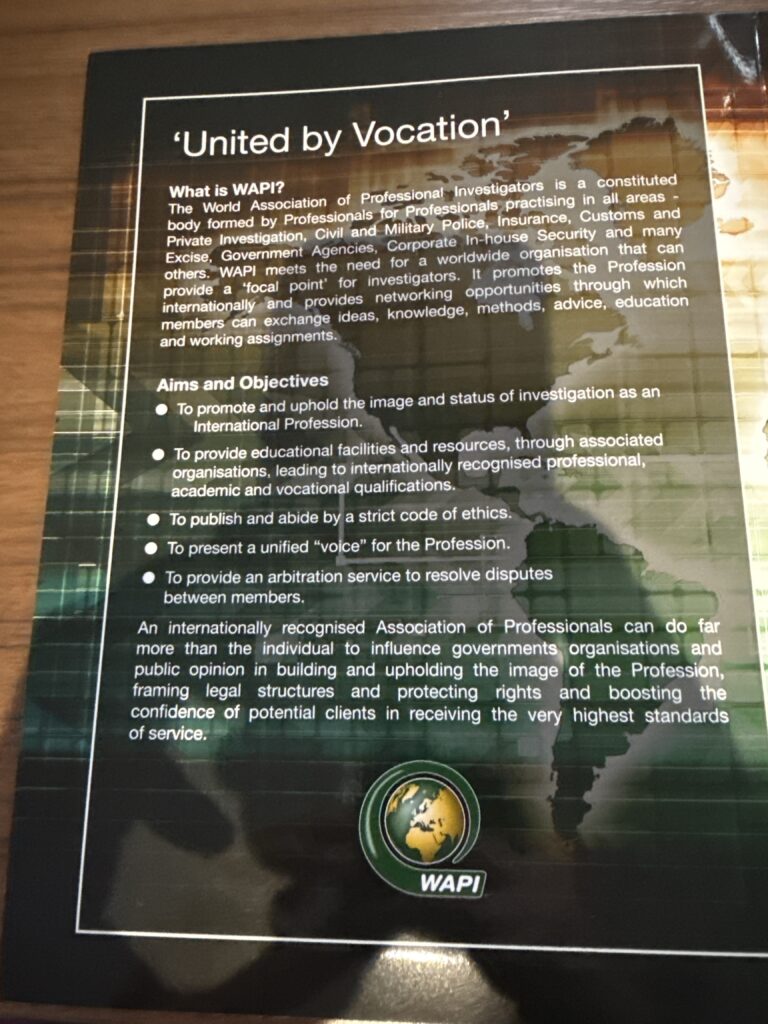
WAPI is a professional body formed by investigators for investigators. As their mission statement explains, the organisation acts as a “focal point for investigators,” offering education, networking, and an internationally recognised voice for the profession. Among its aims are to uphold the image of investigation as an international profession, provide training and resources that lead to recognised qualifications, publish and abide by a strict code of ethics, and offer a neutral arbitration service for disputes. In short, WAPI exists to support professional investigators and raise standards worldwide. The association’s description captures this succinctly:
Setting the Scene.
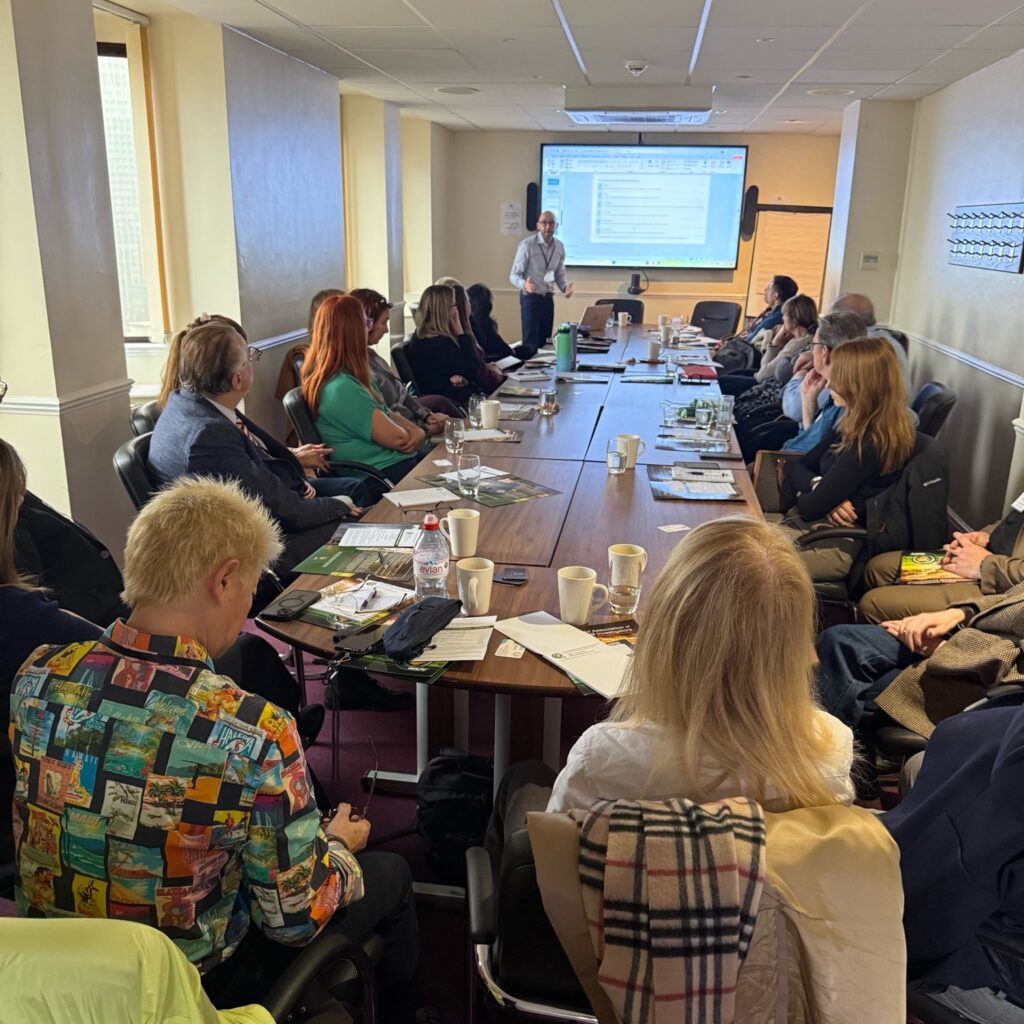
The workshop ran from 9.30am until 4pm at the Union Jack Club in Waterloo. After registration over coffee and tea, attendees were welcomed and briefed on the day’s housekeeping. Four structured sessions followed, separated by a lunch break and a short afternoon interval. Throughout the day the conversation returned to one theme: how to harness modern tools and comply with increasingly complex data‑protection obligations without losing sight of investigative fundamentals
Session 1 – AI for Investigators
The morning opened with Roland Ellingworth’s session titled “AI in Investigations & Business: Integration, Insight, and the Privacy Imperative.” Roland, who brings more than two decades of experience in AI integration and digital transformation across start‑ups, SMEs and FTSE 100 firms, delivered an accessible overview of how artificial intelligence is reshaping private investigation and business operations. He illustrated how smarter use of data, automation and decision‑support tools can enhance case work while freeing up time for human judgement.
Importantly, Roland didn’t shy away from the ethical and regulatory challenges. Deploying AI in sensitive contexts demands careful governance, robust frameworks and a clear understanding of privacy law. He outlined practical models for responsible AI adoption that balance innovation with compliance. The session was tailored for non‑technical audiences, giving investigators and compliance professionals concrete frameworks they can adopt today.
Lunch & Session 2 – AI Q&A
After a buffet lunch, Roland returned for a brief Q&A to answer questions that had emerged from the morning’s presentation. This continuation allowed delegates to clarify the nuances of AI tools, probe deeper into governance issues and share their own experiences in the field.
Session 3 – Desktop Tracing Tips and the DPA
The afternoon’s focus shifted from technology to investigative craft with Chris Booth and Sam Henderson’s session on desktop tracing and the Data Protection Act (DPA). With almost four decades of tracing experience, Chris offered an insider’s perspective on the best databases, search methodologies and due‑diligence steps involved in locating people quickly and lawfully. Sam, representing the next generation of the family firm, demonstrated online tracing tools and how to combine multiple sources to build a clearer picture without overstepping legal boundaries.
The discussion emphasised the investigator’s responsibility to respect data‑protection rules when working with sensitive personal data. Practical examples showed how to document searches and handle information ethically, highlighting how compliance doesn’t have to slow down an investigation.
Session 4 – An Overview of the GDPR (DPA)
The final session, again led by Chris Booth and Sam Henderson, provided a concise overview of the General Data Protection Regulation (GDPR) and its UK implementation under the Data Protection Act. They explained how the GDPR sits alongside investigators’ obligations under the DPA, and why proposed alternative licensing schemes for the profession may not solve the core issues investigators face when handling data. Attendees left with a clearer understanding of how to meet regulatory requirements while still delivering results for clients.
Looking Ahead
While the formal workshop concluded at 4pm, the community spirit continued into the evening. Attendees reconvened for a banquet and awards ceremony, celebrating excellence within the investigation profession. These events are more than a meal; they are an opportunity to honour colleagues who have made significant contributions and to build relationships that last long after the training day is over.
Continuing professional development isn’t optional in an industry that deals with rapidly evolving technologies and regulations. WAPI’s training day underscored the importance of learning together – from seasoned experts sharing practical tracing tips to innovators guiding us through the complexities of AI and data protection. As private investigators, we owe it to our clients and ourselves to stay informed, stay compliant and stay connected.
Whether you attended the workshop or are discovering it for the first time, consider joining WAPI to engage with a global network of investigators committed to upholding the highest standards. Events like Continuing Education and Community: WAPI’s 2025 Training Day
Investigators don’t operate in a vacuum. To keep pace with evolving technology, law, and professional standards, we need places to learn and share. On Saturday 15 November 2025, the World Association of Professional Investigators (WAPI) provided just such a forum at the Union Jack Club in London. Their Continuing Education Workshop – Training Day brought together private investigators, compliance professionals and business leaders to explore how technology, best‑practice tracing techniques and regulatory frameworks are reshaping our work.
About WAPI
WAPI is a professional body formed by investigators for investigators. As their mission statement explains, the organisation acts as a “focal point for investigators,” offering education, networking, and an internationally recognised voice for the profession. Among its aims are to uphold the image of investigation as an international profession, provide training and resources that lead to recognised qualifications, publish and abide by a strict code of ethics, and offer a neutral arbitration service for disputes. In short, WAPI exists to support professional investigators and raise standards worldwide. The association’s description captures this succinctly:
Setting the Scene
The workshop ran from 9.30am until 4pm at the Union Jack Club in Waterloo. After registration over coffee and tea, attendees were welcomed and briefed on the day’s housekeeping. Four structured sessions followed,
by a lunch break and a short afternoon interval. Throughout the day the conversation returned to one theme: how to harness modern tools and comply with increasingly complex data‑protection obligations without losing sight of investigative fundamentals.
Session 1 – AI for Investigators
The morning opened with Roland Ellingworth’s session titled “AI in Investigations & Business: Integration, Insight, and the Privacy Imperative.” Roland, who brings more than two decades of experience in AI integration and digital transformation across start‑ups, SMEs and FTSE 100 firms, delivered an accessible overview of how artificial intelligence is reshaping private investigation and business operations. He illustrated how smarter use of data, automation and decision‑support tools can enhance case work while freeing up time for human judgement.
Importantly, Roland didn’t shy away from the ethical and regulatory challenges. Deploying AI in sensitive contexts demands careful governance, robust frameworks and a clear understanding of privacy law. He outlined practical models for responsible AI adoption that balance innovation with compliance. The session was tailored for non‑technical audiences, giving investigators and compliance professionals concrete frameworks they can adopt today.
Lunch & Session 2 – AI Q&A
After a buffet lunch, Roland returned for a brief Q&A to answer questions that had emerged from the morning’s presentation. This continuation allowed delegates to clarify the nuances of AI tools, probe deeper into governance issues and share their own experiences in the field.
Session 3 – Desktop Tracing Tips and the DPA
The afternoon’s focus shifted from technology to investigative craft with Chris Booth and Sam Henderson’s session on desktop tracing and the Data Protection Act (DPA). With almost four decades of tracing experience, Chris offered an insider’s perspective on the best databases, search methodologies and due‑diligence steps involved in locating people quickly and lawfully. Sam, representing the next generation of the family firm, demonstrated online tracing tools and how to combine multiple sources to build a clearer picture without overstepping legal boundaries.
The discussion emphasised the investigator’s responsibility to respect data‑protection rules when working with sensitive personal data. Practical examples showed how to document searches and handle information ethically, highlighting how compliance doesn’t have to slow down an investigation.
Session 4 – An Overview of the GDPR (DPA)
The final session, again led by Chris Booth and Sam Henderson, provided a concise overview of the General Data Protection Regulation (GDPR) and its UK implementation under the Data Protection Act. They explained how the GDPR of how to meet regulatory requirements while still delivering results for clients.
Evening Banquet and Awards
While the formal workshop concluded at 4pm, the community spirit continued into the evening. Attendees reconvened for a banquet and awards ceremony, celebrating excellence within the investigation profession. These events are more than a meal; they are an opportunity to honour colleagues who have made significant contributions and to build relationships that last long after the training day is over.
Looking Ahead
Continuing professional development isn’t optional in an industry that deals with rapidly evolving technologies and regulations. WAPI’s training day underscored the importance of learning together – from seasoned experts sharing practical tracing tips to innovators guiding us through the complexities of AI and data protection. As private investigators, we owe it to our clients and ourselves to stay informed, stay compliant and stay connected.
Whether you attended the workshop or are discovering it for the first time, consider joining WAPI to engage with a global network of investigators committed to upholding the highest standards. Events like this remind us that our profession is united by vocation and strengthened through collaboration. remind us that our profession is united by vocation and strengthened through collaboration.